


Fifteen years ago this month my father died, and I wasn’t feeling so hot myself. But then came the phone call that changed everything — with an assist from a whole bunch of trick-or-treaters.
My father started writing letters to me when I left home for college. Over the next 28 years that continued, about one letter per month, mostly rants against modernity seasoned with humorous updates from his life. Then came the letter in September 2011 informing me that he had been diagnosed with advanced esophageal cancer. That letter was sent to me and my older brother and sister. Notifying his children of his imminent demise by US Mail was on-brand for my father.
My sister Glenda high-tailed it to Washington State. She was with Daddy in the hospital when he passed, and she had the foresight to call me so that my father and I could have one last talk. Diane and I arrived at SeaTac the day after he died. Glenda picked us up and we made the long drive to Port Townsend, where my father had built a charming log house overlooking the old army fort. You could sit on his back porch and watch the ships as they passed through the channel where the Strait of San Juan de Fuca meets Puget Sound.
And sitting is pretty much all I did for the next week as Diane and my older brother and sister went through Daddy’s house. I simply didn’t have the energy. The drug that I’d been using to keep my hairy cell leukemia in remission had gradually worn out its welcome, and my blood counts had nosedived. I kept soldiering on at the Kansas City Star, not telling anyone what was going on. Finally Diane insisted I start looking for another clinical trial. I found a hairy cell patient group online, and someone there suggested I reach out to NIH. So I did.
As I sat working on Daddy’s eulogy, my phone rang. It was Rita Mincemoyer, a nurse at the National Institutes of Health in Bethesda, Maryland. She worked for Dr. Robert Kreitman, one of the world’s leading researchers of hairy cell leukemia. Rita interviewed me for two hours. I told her I had been taking a drug called rituximab for ten years, making more than 70 trips to the infusion room. Rita had never interviewed someone who’d gotten that much rituximab. She said she would send me an overnight package with blood collection tubes. I was to get them drawn the following Monday because they had to arrive in Bethesda the next day. That was the only day that month that the NIH lab was available.
On Monday, October 31st, I got my blood drawn at the Port Townsend hospital, sealed the hazmat envelope and called for the FedEx driver. Who never came. Turns out the FedEx driver didn’t always make a stop in Port Townsend (?!) so I would have to get my blood samples to the Seattle FedEx depot myself.
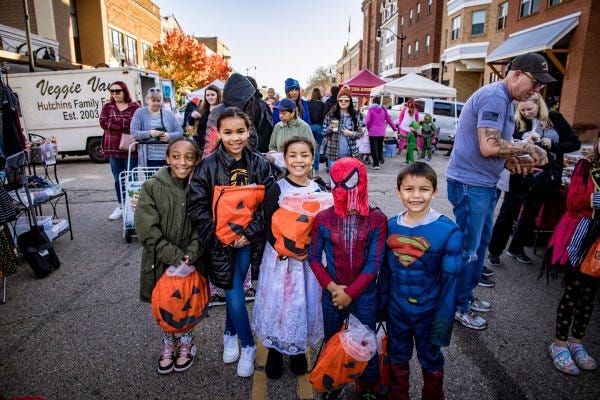
With the afternoon sun fading, Diane and I piled into the car and Glenda navigated the tangle of roads leading to the Bainbridge Island ferry boat, our only shot of making Seattle in time. When we got to the ferry station, though, we discovered that the Bainbridge Island Downtown Association was holding its annual Trick or Treat Downtown, and hundreds of children were tromping through the streets holding up traffic.
We inched through downtown and got into the queue for the ferry, unsure if we were going to make our boat. Fortunately, our car was one of the last ones to load. The ferry departed and we stepped out on deck. My sister pointed to the bow and said, “There’s a FedEx truck!” Taking my envelope she walked over and handed off the precious cargo to the driver. As he scanned in the envelope’s barcode he told Glenda, “You never would have made it in time.” The Seattle FedEx depot would be closed by the time we got there. But they were taking the packages on his truck. He was supposed to be on an earlier ferry but he was delayed … thanks to the trick-or-treaters of Bainbridge Island.
By the time I arrived at the NIH Clinical Center six weeks later, I was in rough shape. Dr. Kreitman put me through two clinical trials before finding the combination that worked. The disease has been in remission for almost 15 years. At my last visit to NIH in August, they found no hairy cells in my bloodstream.
The day is coming when a class of drugs will do for dementia what my drugs did for leukemia. And then millions of spouses won’t have to go through what I went through with Diane.
Once a Runner
I finally got around to reading Once a Runner, John L. Parker’s debut novel from 1978. I read the 2009 reissue by Scribner that includes an afterword from the author. Parker, who was a standout in the mile at the University of Florida, said he wrote Once a Runner because there was no work of fiction that captured what it was like to be a competitive runner. After a string of rejections, Parker self-published Once a Runner and sold thousands of copies to shoe stores and fellow runners.
The book is set in a fictional college town not unlike Gainesville, and Parker draws extensively on his own collegiate experience — specifically, what it means to train to the brink of insanity and to the exclusion of every relationship, except those people who can help you achieve your goal of racing four laps around the track faster than you ever dreamed possible.
Every voice in Once a Runner sounds like someone who’s read too much Faulkner and Hemingway, but Parker clearly enjoyed reimagining his glory days and I enjoyed reading about them. The book ends with a high-stakes race that all the main characters are in attendance to see, and makes me think Parker wrote the scene with Hollywood in mind.
Once a Runner never got made into a movie, and it’s just as well. This is a novel that worked best for me in its prosaic details about running, especially the mental duress that every athlete must learn to handle if they’re to succeed on race day. I’m just an old hobby jogger, but I enjoy winning my age group and Parker’s descriptions of the mental aspect of running rang oh so true.
(Speaking of which, I ran my fourth Chicago Marathon in October, finishing in 3:16 on a sore hamstring and in 70-degree heat, good for 38th in my age group. Mentally it was a good race. Physically, I hope to have my hamstring 100% healthy in time for November’s half marathon at Indianapolis.)
SOMC: Beet soup with tomatoes and goat cheese
Longtime followers of The Diane Project will recall that I started a soup club two years ago this month, at the co-working space where I have a desk. I make soup for 10 to 20 of my fellow desk jockeys, my friend Charlie makes the salad, and others bring bread and desserts.
My Soup of the Month comes from DK Publishing’s The Soup Book. If you wish you had a higher opinion of borscht, here’s a sweeter variant. I quadrupled this recipe for soup club and everyone loved it.
Start by turning your oven to 375. Peel, core and slice a half pound of apples. Take a pound of big ripe tomatoes and core them, then cut them in half. Toss the tomatoes and apples in oil and spread them out on a sheet pan.
While they roast for 30 minutes, put on a pair of those disposable gloves you bought during Covid and peel one pound of beets. Then grate the beets on a box grater. Get a large pan going with some oil, chop up an onion and cook it a few minutes in the pan until it’s soft. Now add the beets and two cups of stock, preferably beef. Simmer all that until the beets are tender, then turn it off.
When the tomatoes and apples are falling apart, take them out of the oven. If you have a strainer or food mill you can run them through that, or just add them as they are to the pan. With all your ingredients in the pan, let it cool a bit, then process with a blender until your soup is as smooth as you can get it.
Season with salt and pepper. Serve topped with crumbles of nice hard goat cheese.
About this journal
Since Diane passed in May of 2025 — I can hardly believe it’s been a year and a half — the question I get asked more than any other is, What am I up to these days? This monthly journal is my attempt to answer that question.
I have a full life, but it’s a much different life than any I’ve known before. My newfound solitude and my years on the caregiving journey have opened up horizons and I’m still exploring them. I write every day, but I’m a long ways off from producing a creative work for public release.
A while ago I realized I’ve missed creating content. Hence this journal. I hope it keeps you well fed — not just with soup but with stories, recommendations and updates from my life.
I’ll publish the October journal in a few days as a podcast. In future I’ll publish both words and audio at the same time.
Thanks for reading,
Aaron
Thanks, Aaron. It's always a pleasure to "hear" your words.
What a great story, Aaron. So glad you got in on that clinical trial and are still with us, running and making soup to share.